There's a version of Scott Hepford's career that reads like a straight line, financial services, technology, consulting, entrepreneurship. The titles got bigger. The companies got more complex. The trajectory made sense.
Scott spent the first half of his career inside the machinery of American business. He managed lending operations at Wells Fargo. He rose to Vice President at Washington Mutual, where he oversaw offshore operations and business development strategy. He ran project execution at Expedia. He built and refined the kind of large-scale operational systems that most people never see but everyone depends on.
But the real story is a turn nobody would have predicted.



Then he co-founded a private equity firm. Then he met a problem that changed everything.
The problem was diabetes, not as a medical abstraction, but as a human crisis hiding in plain sight. Hundreds of millions of people worldwide, trapped in a cycle of escalating medications, worsening complications, and a healthcare system that was treating symptoms while the disease marched forward. And buried in the research, an idea that almost nobody was talking about: what if insulin, used since 1922 as a drug, could instead be delivered the way the body was designed to use it? As a hormone. In rhythm. Addressing what was broken rather than compensating for it.
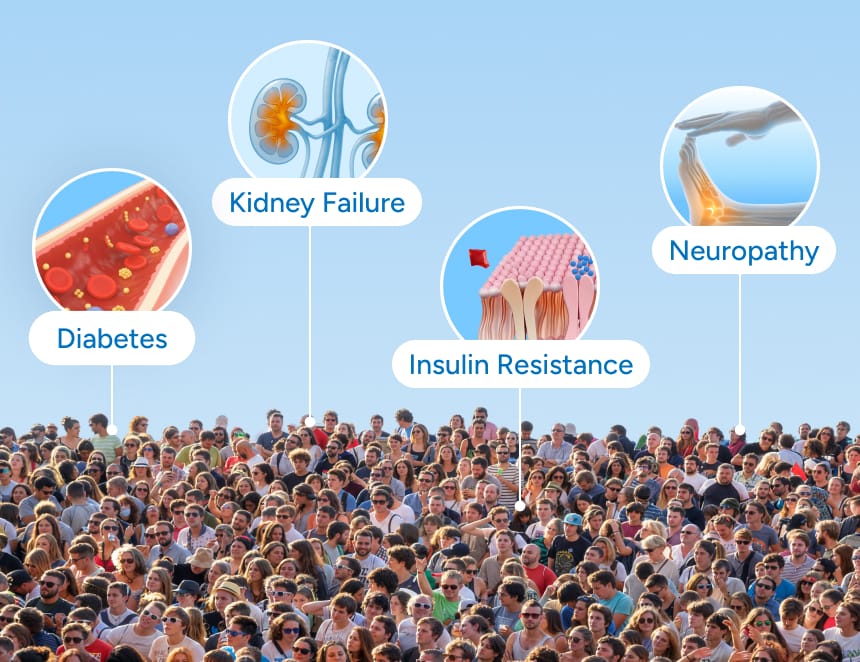
That idea became Diabetes Relief. Diabetes Relief became Well Cell Global. And the operational mind that had optimized mortgage pipelines and e-commerce systems turned its full attention to something that actually kept him up at night: building a global platform to bring Physiologic Insulin Resensitization to every physician and every patient who needed it.
The transition wasn't cosmetic. Scott didn't simply change industries, he changed what he was building for. The same skills that had made him effective in finance and technology, the ability to systematize, to scale, to align teams across time zones and borders, now had a purpose that felt proportional to the effort.





Today, PIR is in over 212 locations across six continents. It's supported by peer-reviewed research from institutions like Pennington Biomedical Research Center, UC Irvine, and UT Health. It's backed by randomized clinical trials in progress. It's reaching communities in Africa, the Caribbean, the Middle East, and South Asia. And in eastern Uganda, a movement that started with a single conversation about budgeting and faith is now employing local leaders, launching businesses, and delivering life-changing projects across the region.
Scott didn't start out to be a healthcare entrepreneur or a humanitarian. He started out as someone who knew how to build things that work. The difference now is that everything he builds is in service of the same belief: that every person has a God-given destiny, and that with the right tools, the right trust, and the right partnership, they can awaken it.